
My Boots Knew Viðey's Secret Before I Did


Earthshine reader —
It's me, Dazé.
Last time, I rescued this newsletter from quicksand and proclaimed I wouldn't neglect it again.
Well, here I am, delivering.
Once again, I'm spotlighting an occurrence in the capital. But this has no trumpets, banners, or tasty fish soups. Some would call it more barebones, more idiosyncratic, more niche. I keep arriving at quaint.
In other words, if the previous issue was a blockbuster starring Matt Damon, this one is an indie starring Matt Damon. (Of course, I'm Matt, bringing you great acting no matter the film.)
It was August 15, 2026.
August, the tail end of summer. Summer in Iceland is precious. When it's sunny, you go outside. When it's sunny over the weekend, you better pack a tent or get taken by trolls come winter.
After a few weeks of grey skies, including the day of the highly anticipated, once-in-a-lifetime total solar eclipse in Reykjavík (*sigh*), the weather app was hopeful for a warm, blue-sky weekend.
As usual, my wife quickly proposed a hike. Her suggestions included Hverafjall in Krýsuvík, the trail to Búrfellsgjá in Heiðmörk, and Úlfarsfell in Mosfellsbær. All options included a seasonal side quest: berry picking.
It so happened that I was shaking off a flu (third time this year!), so excessive physical exercise wasn't high on my list of desires. At the same time, I wasn't going to disrespect the weather gods.
On a whim, I made a counterproposal:
What about Viðey?
(Viðey is an uninhabited island in Kollafjörður Bay, known for a rich history — and an even richer variety of bird shite — walking trails, and art installations, such as Yoko Ono's Imagine Peace Tower and Richard Serra's Áfangar/Milestones.)
It had been two years since our last visit. Still, I expected some negotiating, but no — my wife accepted.
What's more, she suggested we invite my mother, like last time. Fine by me, but I remained doubtful, as she had been there but a week ago with a friend. Yes, I expected some negotiating, but no — mum accepted.
Two women giving in to a man's request. This is the power of a sunny day in Iceland.
We decided to take the 12:15 ferry, a choice that proved somewhat ambitious given the mountain of chores facing the household that morning.
We left the house by 11:45, barely escaping the trolls' black list.
Ten minutes later, we picked up our companion.
As we drove to the ferry terminal, mum told us about a radio advertisement she had heard that morning announcing an event on Viðey taking place today.
I couldn't believe it. As far as I know (what do I know?), not much happens on Viðey. It's no theme park. There's barely any infrastructure. The only happenings that come to mind are Sunday picnics, some guided tours for the tourists, and the odd confirmation party.
I controlled my curiosity, expecting the event to cost an arm and a leg, require prior booking, be sold out, and have begun two hours ago.
Mum spilt the beans, proving I urgently need to work on my pessimism:
It's the city. It's organising a guided caraway seed picking on the island, starting at 13:15. Apart from the ferry fee, it's free and open to all.
I reacted instinctively:
Caraway picking? On Viðey? Caraway grows in Iceland?!
Mum continued:
I know! It surprised me too, so I did some digging and found out it's an annual thing that's been running for years. Same guide, but this time they're holding it during the day, not evening.
The copilot and I remained speechless.
Mum casually added:
Anyway, I wanted to let you know, in case you'd be interested.
My soul erupted:
Interested? Are you kidding?!
(This is the kind of thing I would have chained to my calendar and given higher priority than my taxes!)
Firstly, I've never harvested caraway. Then there are the odds: 1/365 — that's a 0.27% chance of coinciding with the event. Now remove the decimals: It shouldn't happen!
Suffice to say, mum expected some negotiating, but no — we accepted.
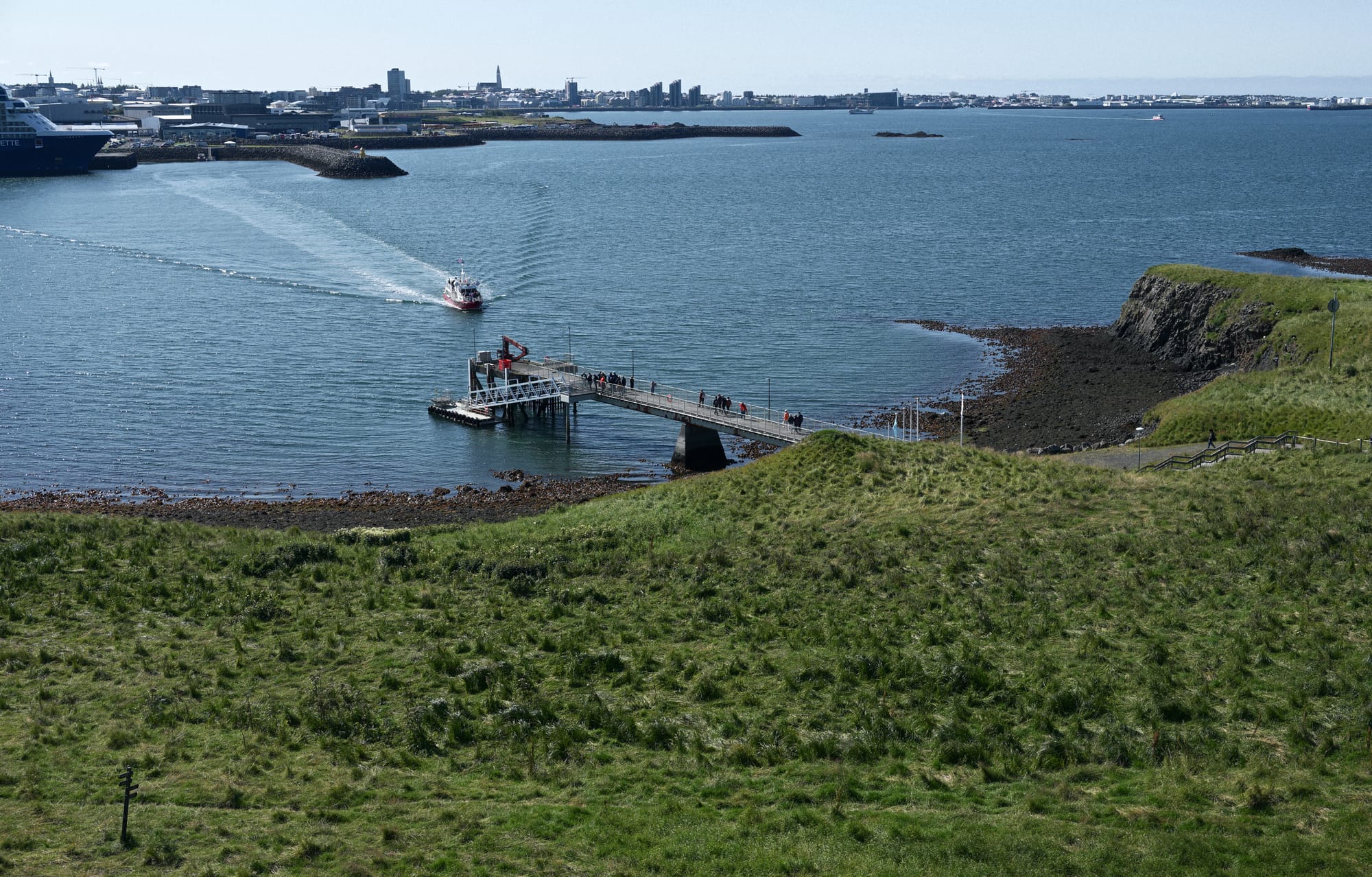
The two main ways to get to Viðey by ferry are Skarfabakki and the Old Harbour. Unless you're stationed downtown, Skarfabakki is the closest and most convenient.
I adore this terminal. It's probably the smallest in the world. I can't see how more than two boats can be docked at the same time. Ironically, it sits beside a brand new cruise terminal, able to store up to two 335-metre bobbing condos at a time.
We arrived ten minutes before departure, plenty of time to park and buy tickets. Except … the parking was full — a first for me.
I let the ladies out to arrange the fare while I resorted to my backup parking at the back of a nearby sewage treatment plant called Skolpa.
After a two-minute stride back to the terminal, I reunited with the ladies, engulfed by the largest Viðey passenger group I had ever seen — 30 strong.
The captain was overwhelmed and had to announce he would need two trips to get us all across the stretch. Luckily, we were third in line.
The main ferry from Skarfabakki is Gestur. It's docked there year-round. But today, Gestur wasn't employed. Instead, Skrúður sailed into the pier from the Old Harbour. Skrúður is larger, and I wonder if that's why Elding (the company behind these services) resorted to her, anticipating the influx of caraway-lusting clients.
The ferry is listed as a five-minute ride. But this time, we were there in just over two. Was the captain rushing because of the others? Was Skrúður simply faster?
Regardless, fast is not always better, especially when it's part of the adventure.
Ah, it felt nice to be back on Viðey, especially on a day like this.
With an hour to kill live before the event, we decided to find a picnic table behind Viðeyjarstofa (Viðey House, the island's main building) and have our lunch.
Curiously, the last time we were here, the three of us unintentionally started a Viðey lunch tradition: flatbrauð (a soft flatbread made from rye flour and water) with butter, a slice of hangikjöt (smoked meat; the fancy type with 55% less fat), and some cheese. But the magic touch? A bottle of sparkling wine.
I don't remember how this came to be, but it's a delight, so there's no going back.
With hangikjöt stuck in our teeth, we returned to Viðeyjarstofa and discovered a small cluster of people by the church. The group faced a woman with a portable voice amplifier, pointing at a selection of botanical books on a stone divider. No eavesdropping was required to conclude this was the expert.
Her name is Björk (no, not that one) Björnsdóttir, and she holds one of the most interesting titles I've ever come across: eco-folklorist. (The more standardised wording is environmentalist and ethnologist.)
Björk was kind enough to give us early birds a teaser of her presentation, which would begin once the others arrived along with the 13:15 ferry.
Mum used the opportunity to ask where they usually advertise. Björk recommended monitoring the Borgarsögusafn Reykjavíkur's website, specifically the events page. (I also found their Facebook post and an article on The Reykjavík Grapevine, my favourite source of Icelandic journalism.)
I had been so immersed in the day's change of plans that it wasn't until the ferry had embarked and Björk had stepped onto higher ground that my camera saw the light of day.
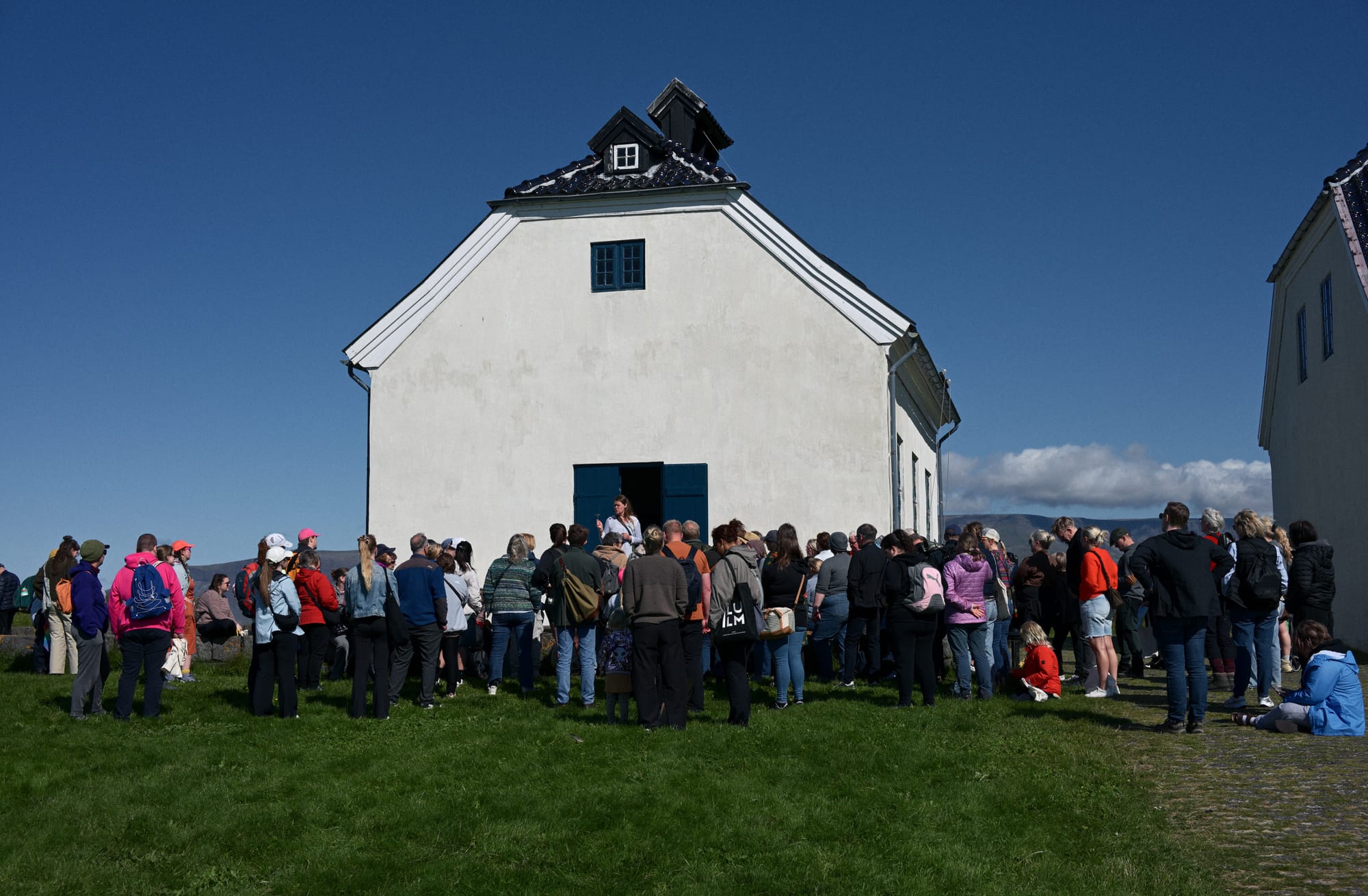
To someone like me who knows little nothing about caraway botany, Björk's speech had the effect of a returned moonwalker.
Her first point was to use the Latin name when referencing plants, because it avoids confusion between translations.
For instance, the Icelandic term for caraway is kúmen, which makes you think of the English plant cumin. But cumin in Icelandic is broddkúmen. This is because caraway and cumin are different plants (and not substitutes in cooking). But unless you're into flora, that's not obvious.
This is where Latin swoops in to clarify:
- Carum carvi = caraway/kúmen
- Cuminum cyminum = cumin/broddkúmen
Now, Carum carvi sounds a bit ominous for this letter, so I'll stick with caraway.
Another thing I learned is that caraway is a biennial plant, meaning it takes two years to grow before it can be harvested.
Björk insisted the plant is dead simple to grow in the garden or an allotment, as it thrives with ease and requires next to no maintenance.
To plant them, she continued, you dig small holes and place a few seeds in each with about 10 cm (4 inches) of margin. That's it.
Caraway seeds planted in the autumn should sprout in spring. But until the flowers have come and gone, and the plant has turned brown, they can't be harvested.
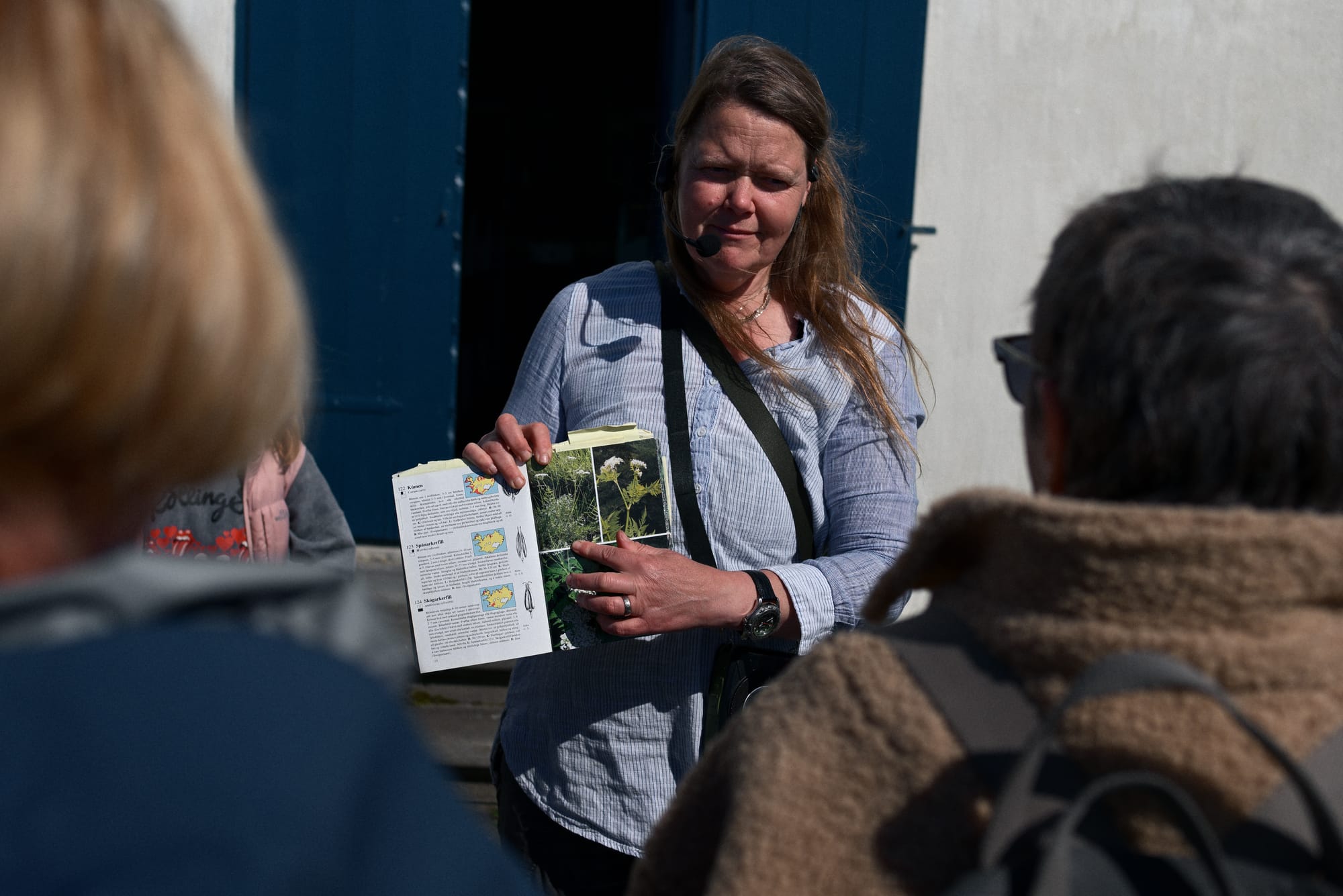
Björk's book recommendations
If your thumb is turning green, here are three books she brought with her and recommends as further reading:
- A Modern Herbal by Mrs M. Grieve
- Plöntuhandbókin: Blómplöntur og byrkningar by Hörður Kristinsson
- Íslensk Flóra by Ágúst H. Bjarnason with illustrations by Eggert Pétursson
Some are rare, she noted, so you may have to search for them second-hand. Björk said she got her copy of A Modern Herbal in London for just £1!
The eco-folklorist didn't just know her subject; Björk is an excellent storyteller.
Here are some — some! — of the things she shed light on that I remember:
- Caraway is widely used by grasalæknar (herbalists) to treat a variety of health issues, namely digestive discomfort and infections. For example, to treat an ear infection, you could bake caraway bread and hold a slice up to the infected ear. Incidentally, caraway is said to boost milk supply for breastfeeding mothers.
- The plant has also been used as an anti-theft charm. By sprinkling, rubbing, or attaching caraway seeds to a precious object, you increase the odds of thwarting a thief. Additionally, during the old wars, soldier wives used the plant as an anti-cheating talisman by hiding the seeds in tiny pouches secretly stitched into the uniform.
- You probably know about caraway's role in baked goods, cheese, and liqueur, but did you know caraway coffee exists? It's found in Þingeyjarsýsla (Thingeyri County), in Northeast Iceland, the only other place where caraway grows wild here. (My mum confirms this, stating caraway coffee was common in her hometown, Húsavík.)
- But how did caraway come to grow on Viðey of all places? It all goes back to Skúli Magnússon, known locally as Skúli fógeti (fógeti translates to bailiff and represents the main authority), who settled on Viðey in the mid-1700s and turned it from a farmstead into a residence. One of his philosophies was that people should be able to live off the land, so when he learned how useful and simple caraway was, he brought it to the island. (There's no consensus on whether he imported it or collected it from the Eastfjords.)
Björk shared many more fascinating oddities, and I was particularly struck by how culturally rich a single plant can be.
The speech also had a more practical chapter, highly relevant to us who just unearthed Viðey's secret summer tradition.
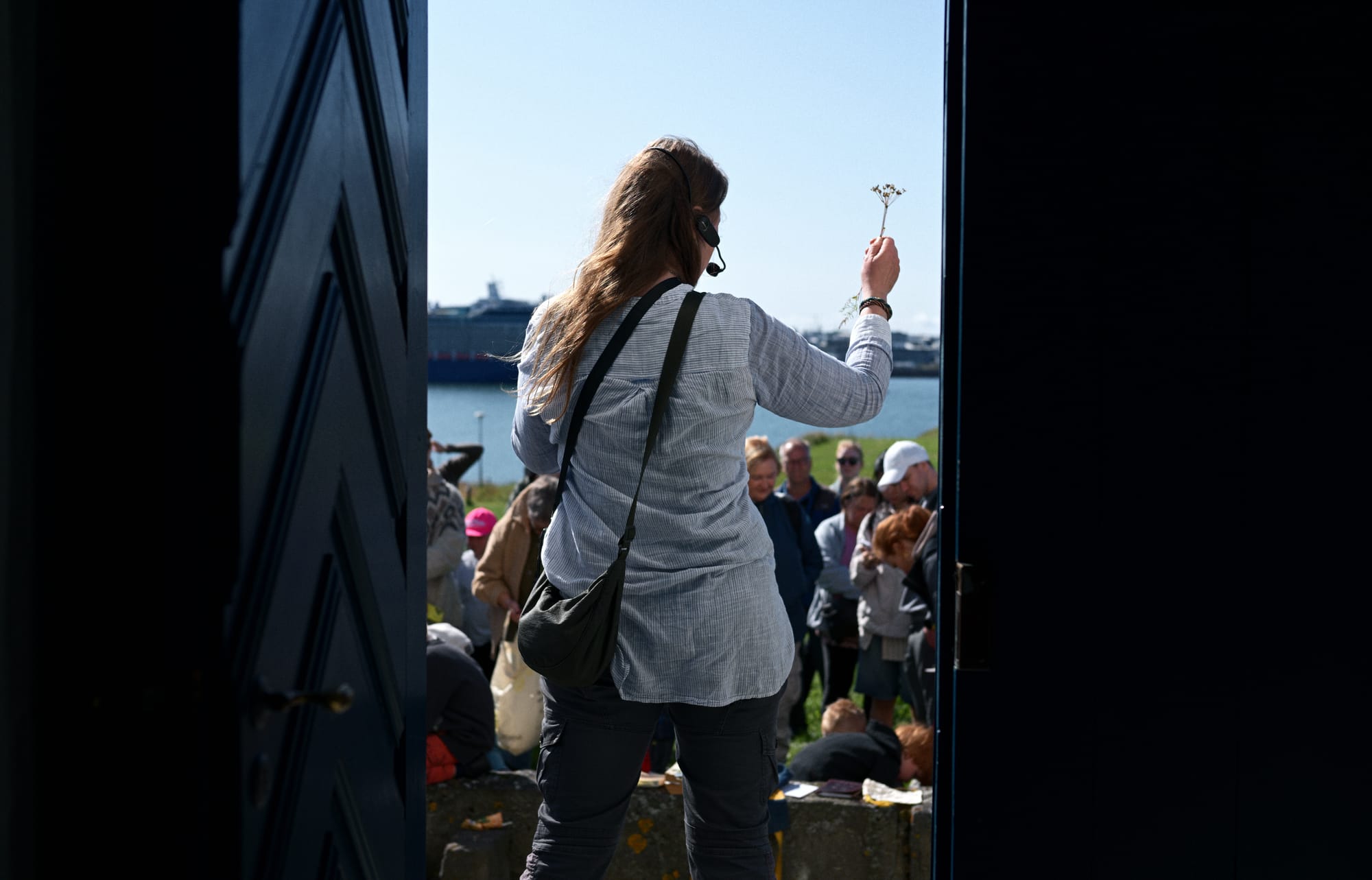
Harvesting caraway, Björk explained, can be done by cutting close to the stem with scissors, or by gently removing the seeds by hand. She also noted that if the seeds are green (as opposed to brown), they're harder to pluck.
We were also reassured that we didn't have to worry about over-consuming the caraway, as the plant was pretty much dead at this stage. If anything, we were doing it a favour, as some seeds will inevitably fall, and secure the next batch.
Once we return home, she continued, the seeds can either be used immediately for cooking, or dried for long-term storage. But you can't have both, stating fresh caraway stored in a jar becomes sticky and humid.
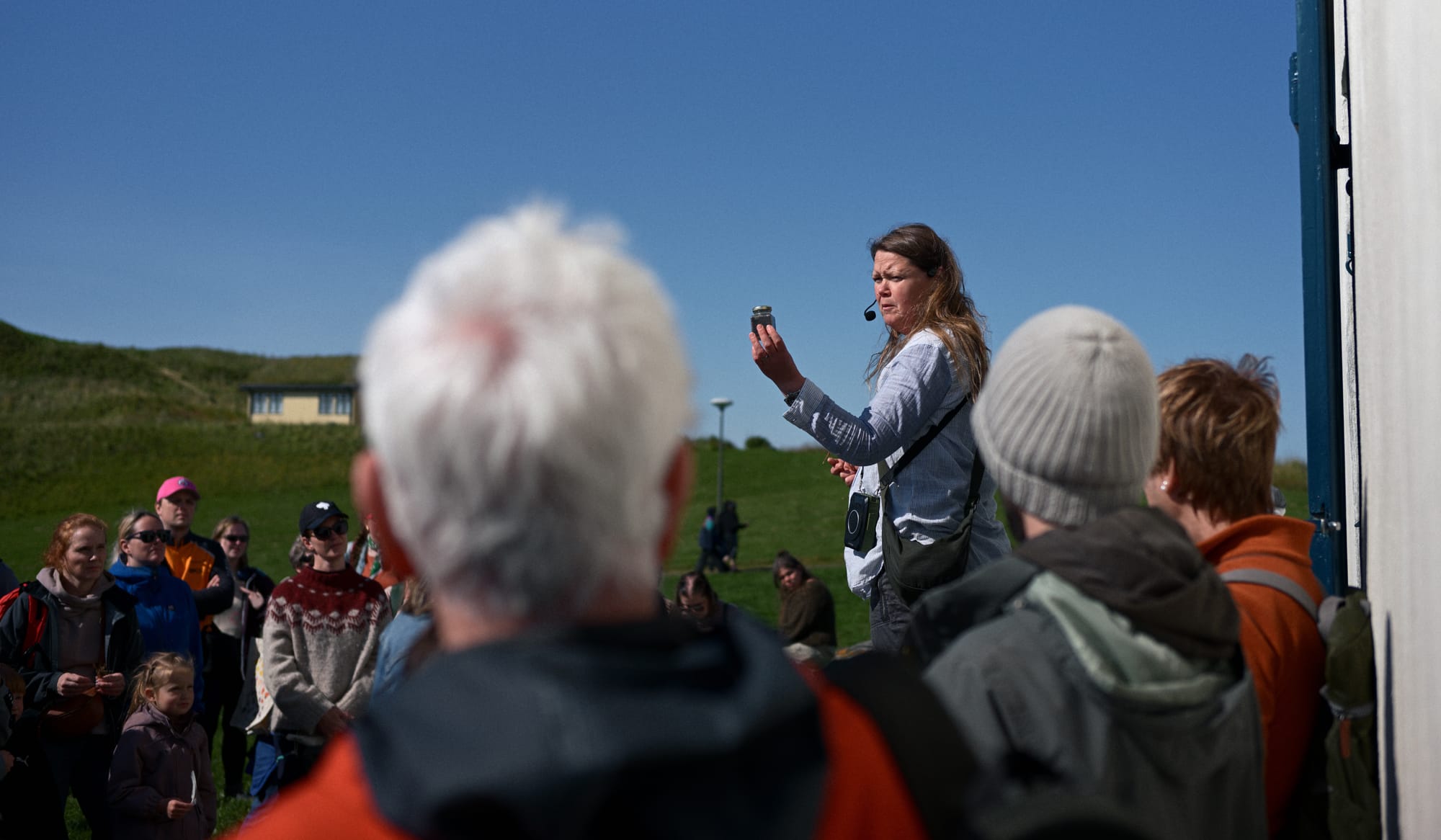
Instead, she continued, the seeds must be dried for up to two months.
To do this, the seeds must be put in a breathable bag and stored in a dry place away from the sun — and the oven — as excessive heat strips the seeds of nutrition. Then, once per day, you shake the bag and run it between your hands.
And with that, the presentation was over, and the treasure was ours to seize.
Brewing with knowledge and excitement, everyone raced off like pull-back cars, settling by the nearest patch of caraway they could find.
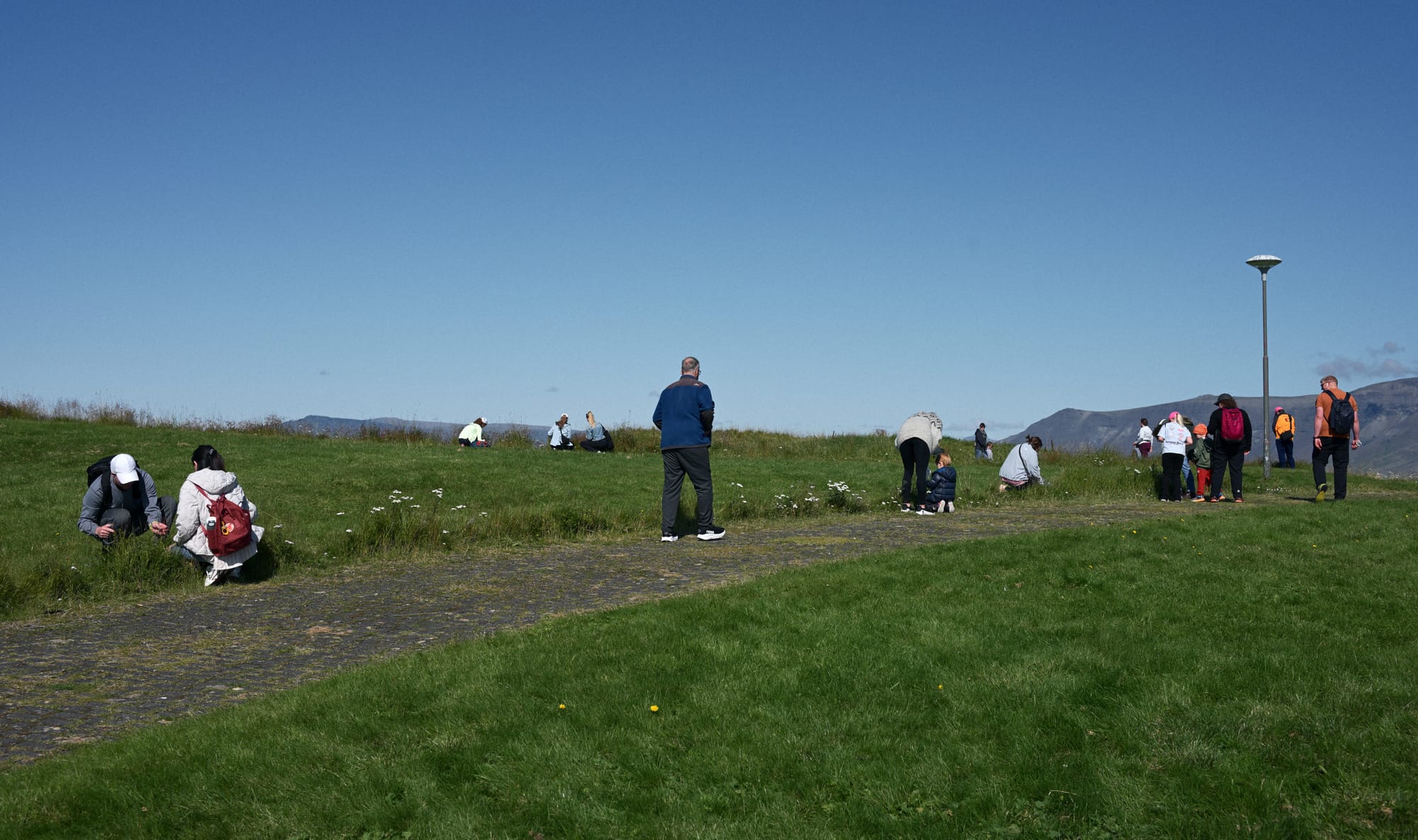
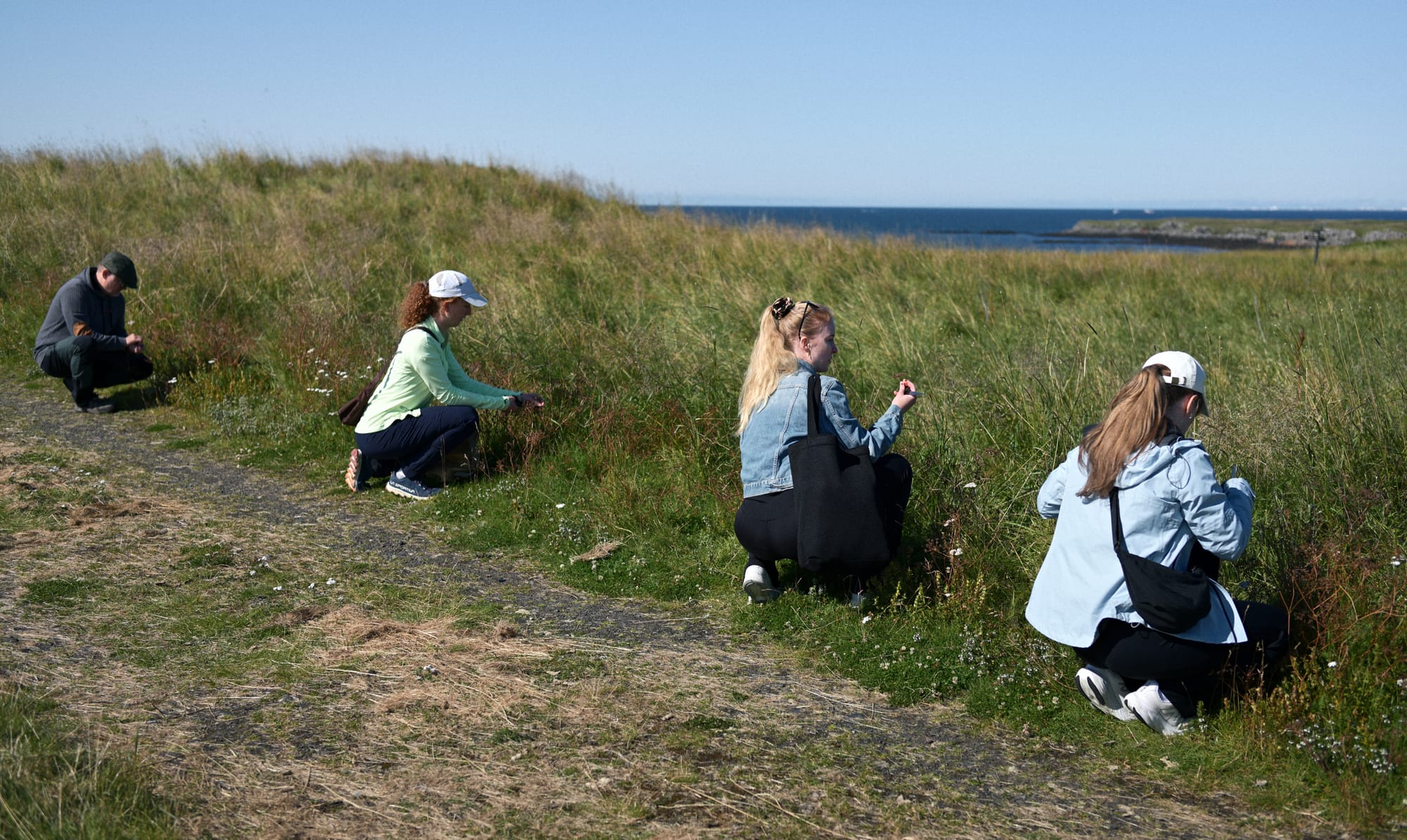
Everyone was so well equipped. Then again, they had gotten the heads up, and might not have been first-timers.
Luckily, my mother's common sense is world-class; she anticipated the need for scissors and bags.
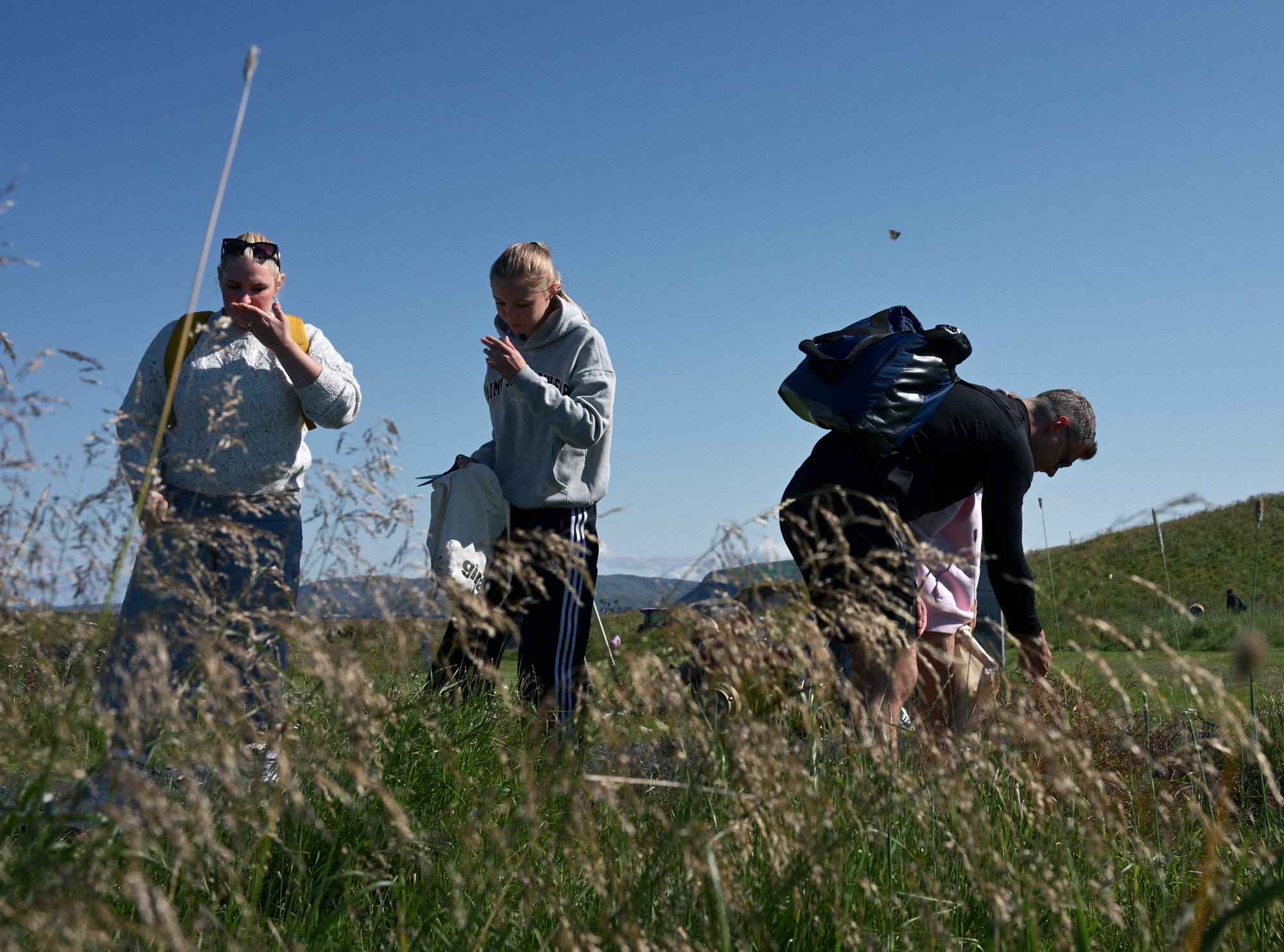
I think it's time I escort you up close to the plant itself.
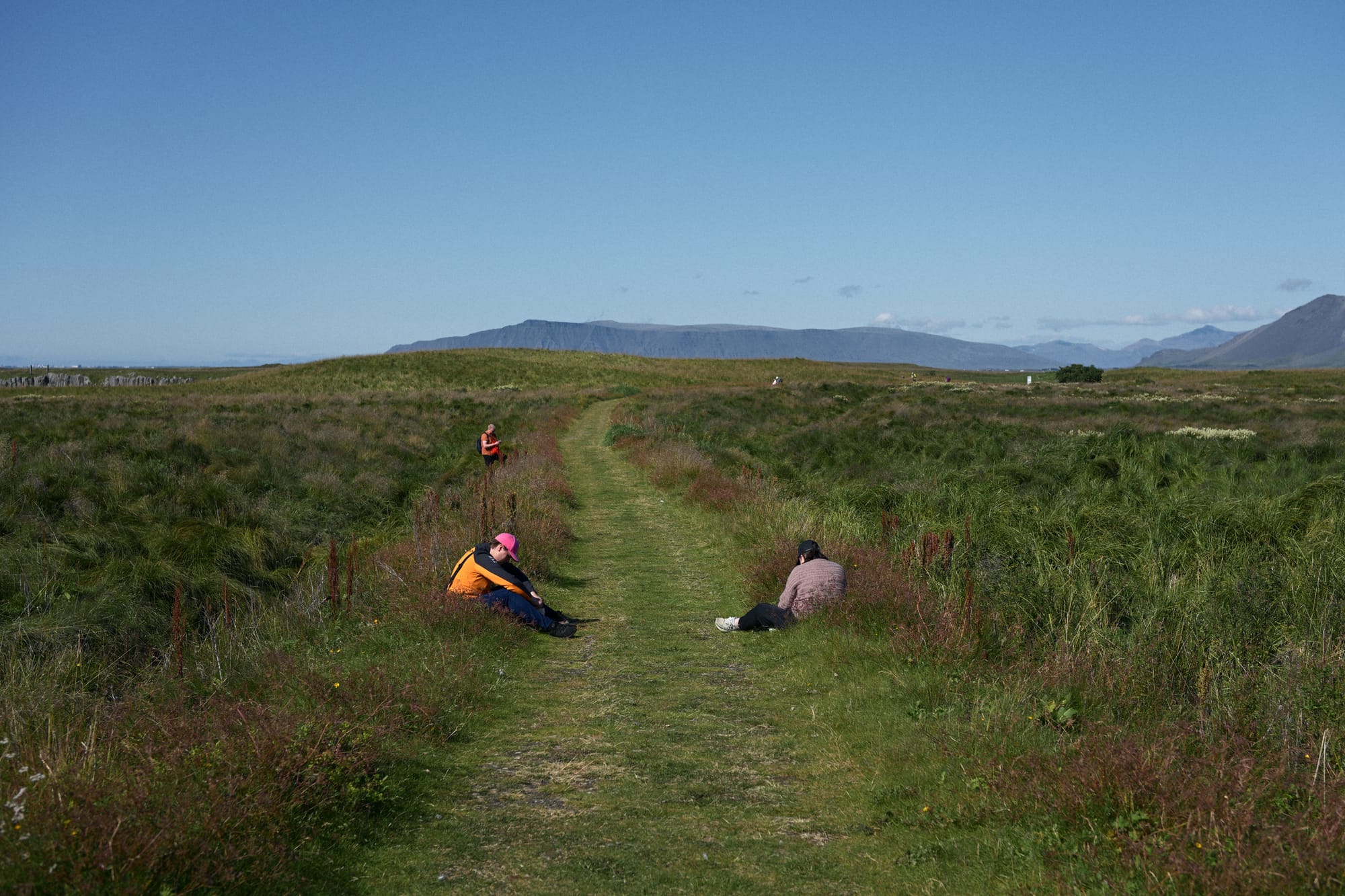
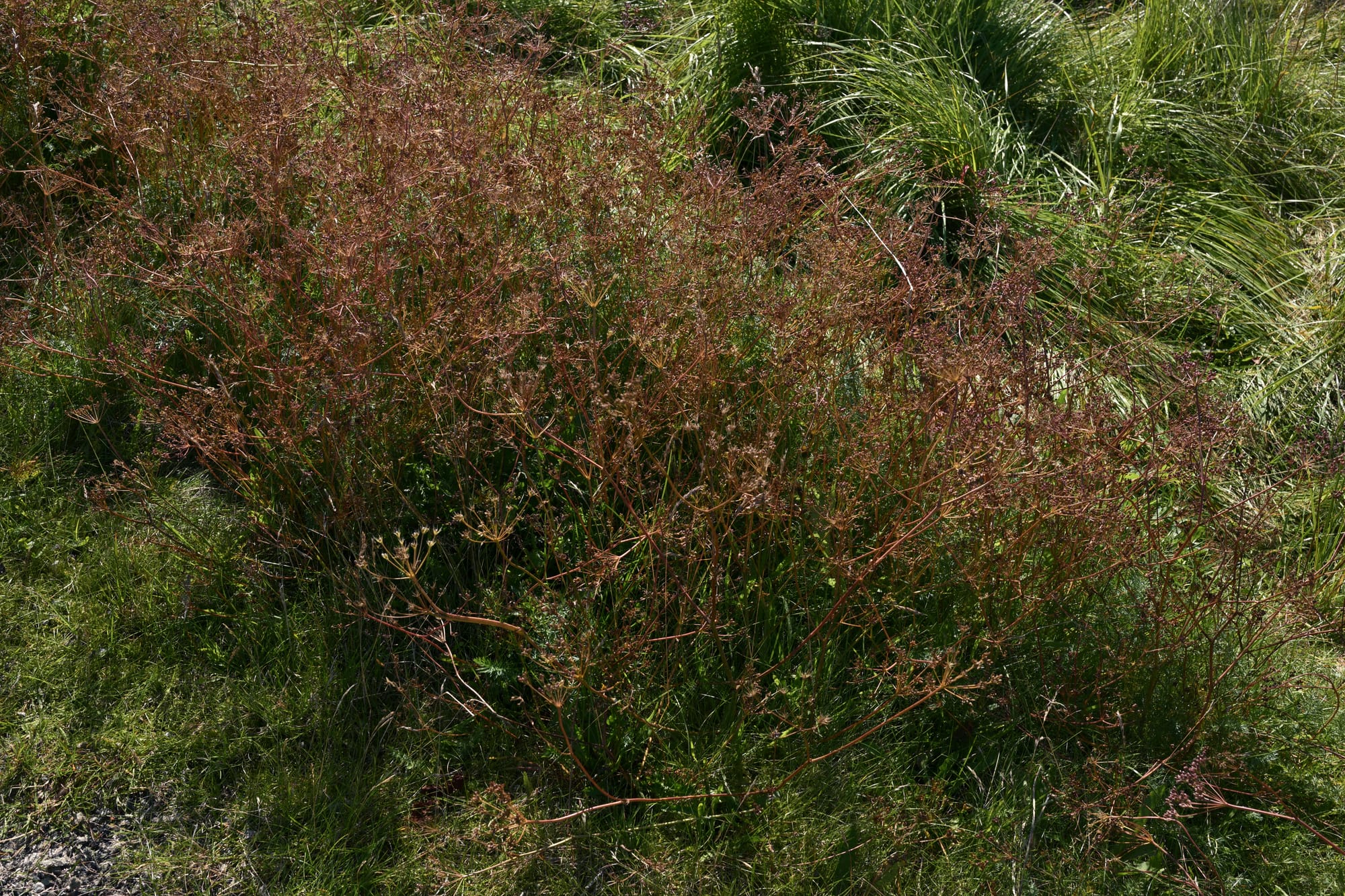
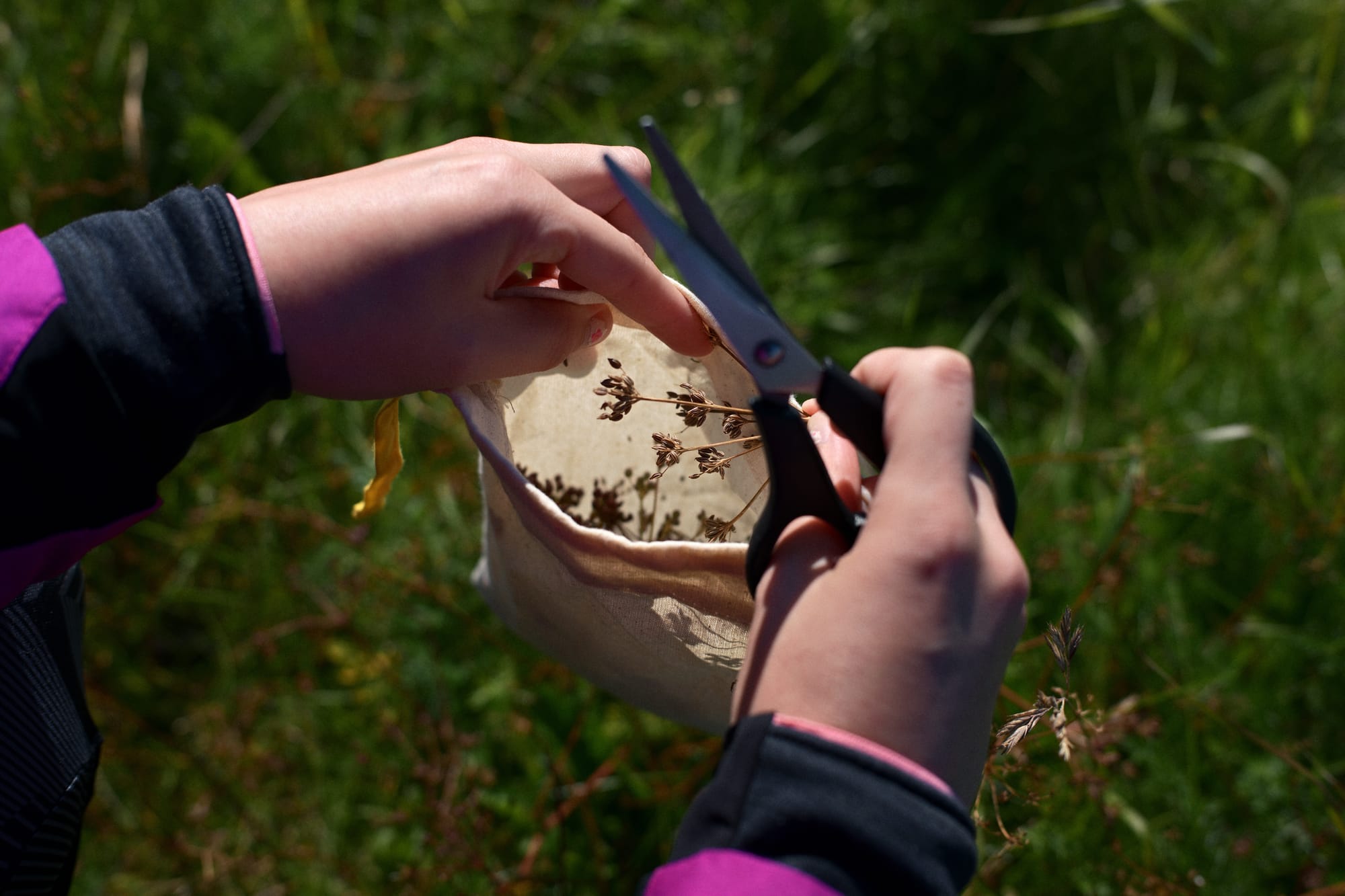
It was my first time this far up the island, so I decided to give my caraway-exuding fingers a new task: capture some of the new scenery.
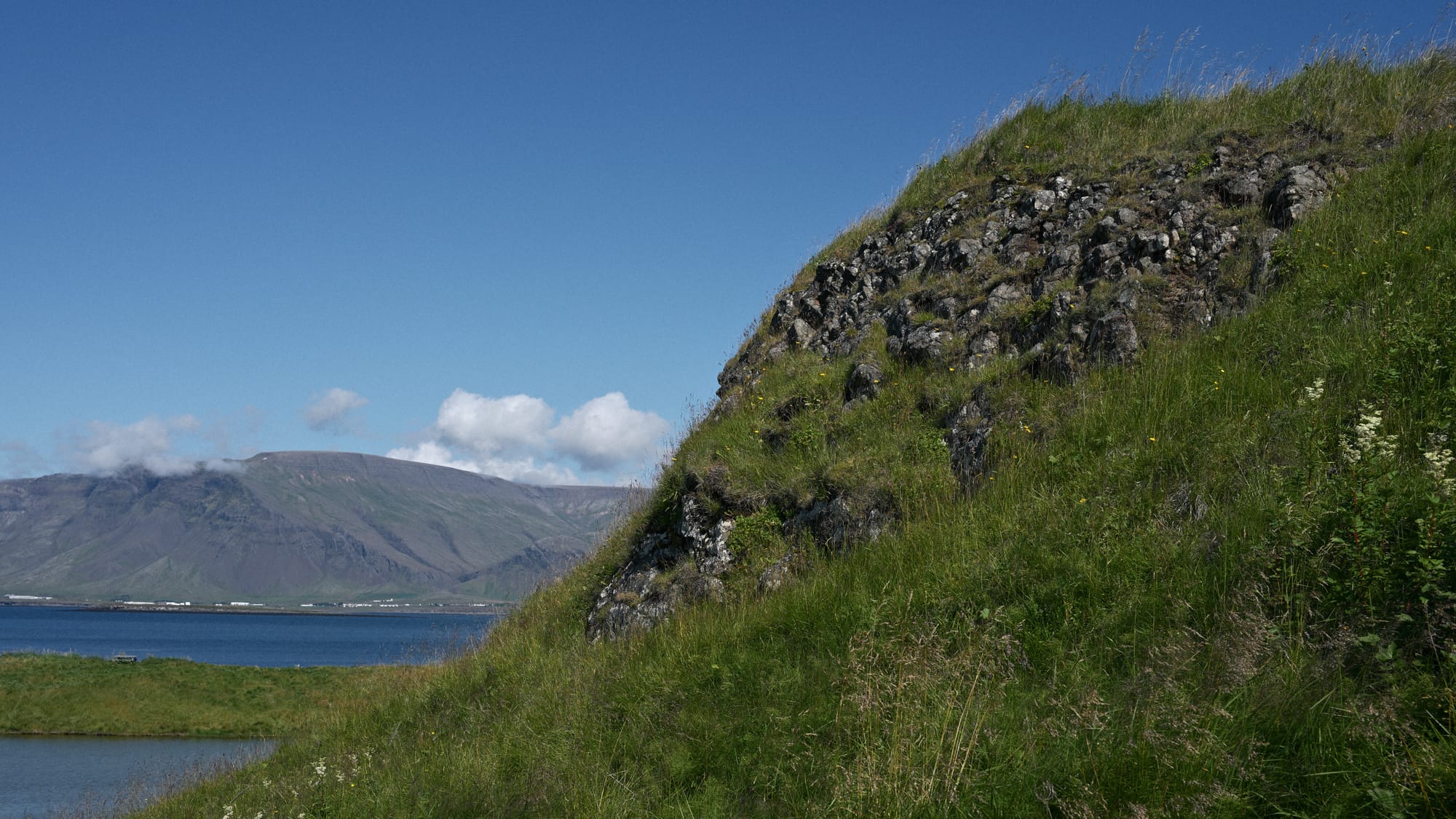
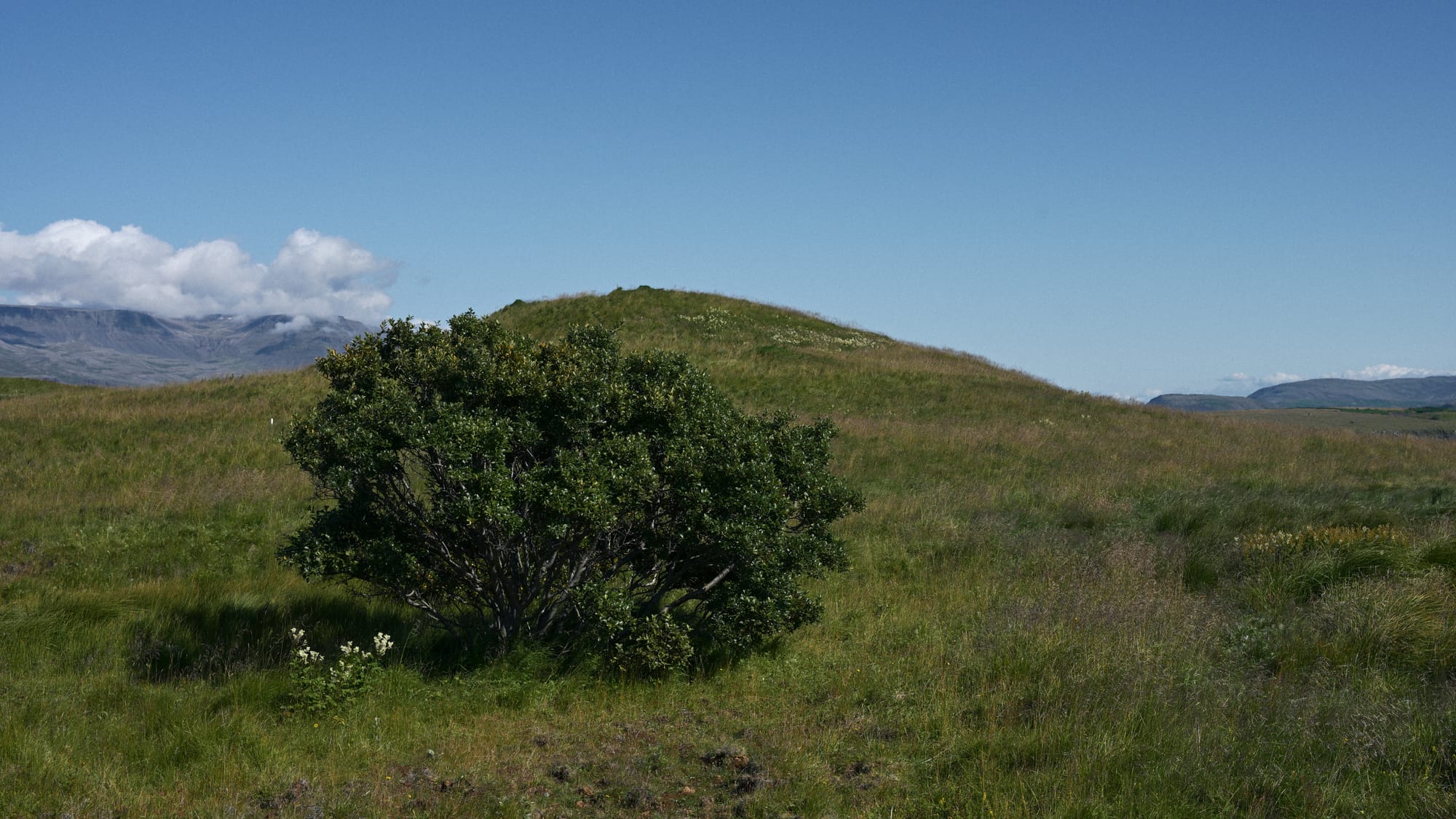
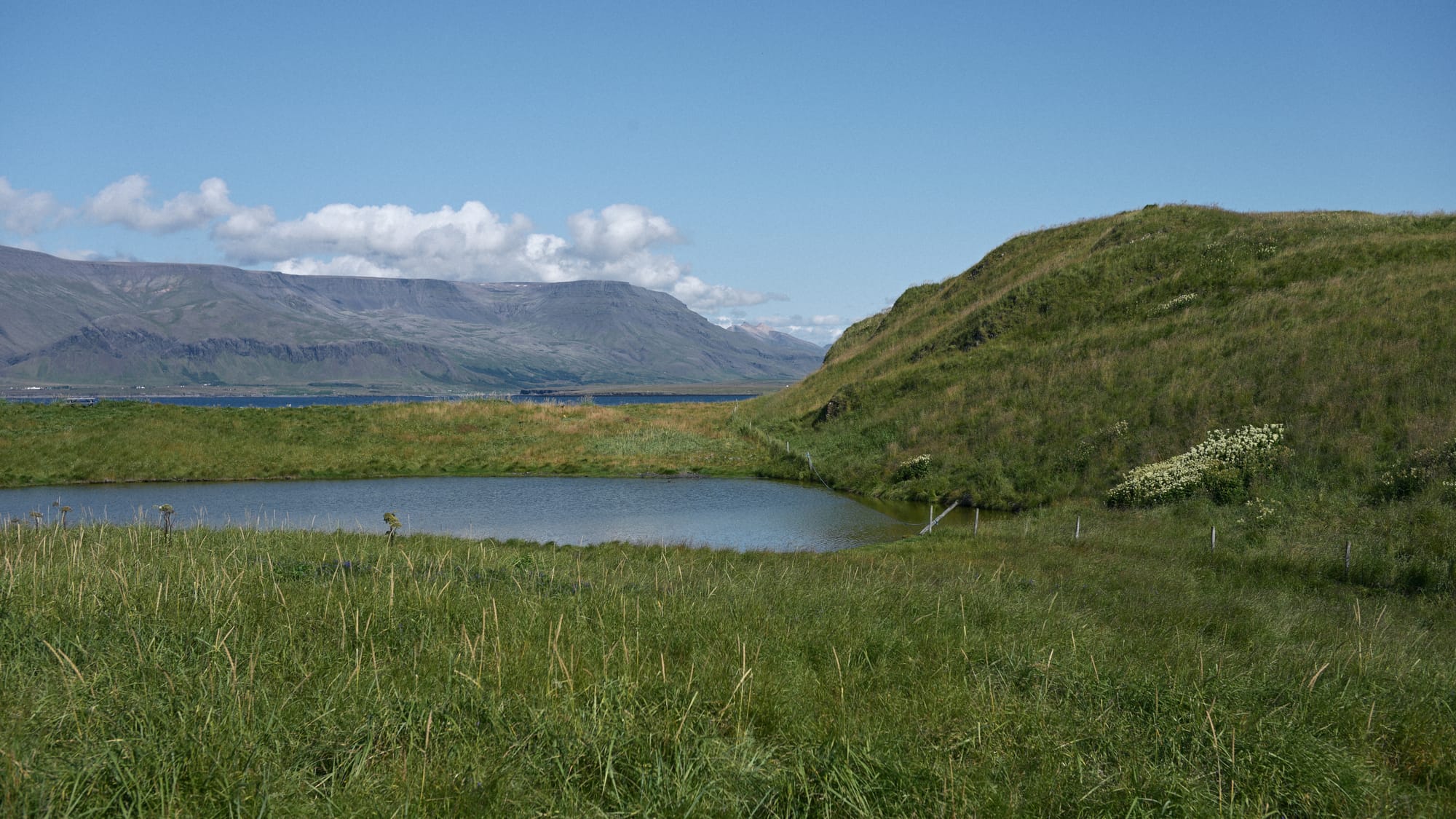
As I prepared to cap the lens, I heard a strange cry with a mammal resonance.
That can't be a gull …
I turned around, and three words escaped my mouth:
There's. No. Way.
The ladies had joined me and had no choice but to follow my gaze.
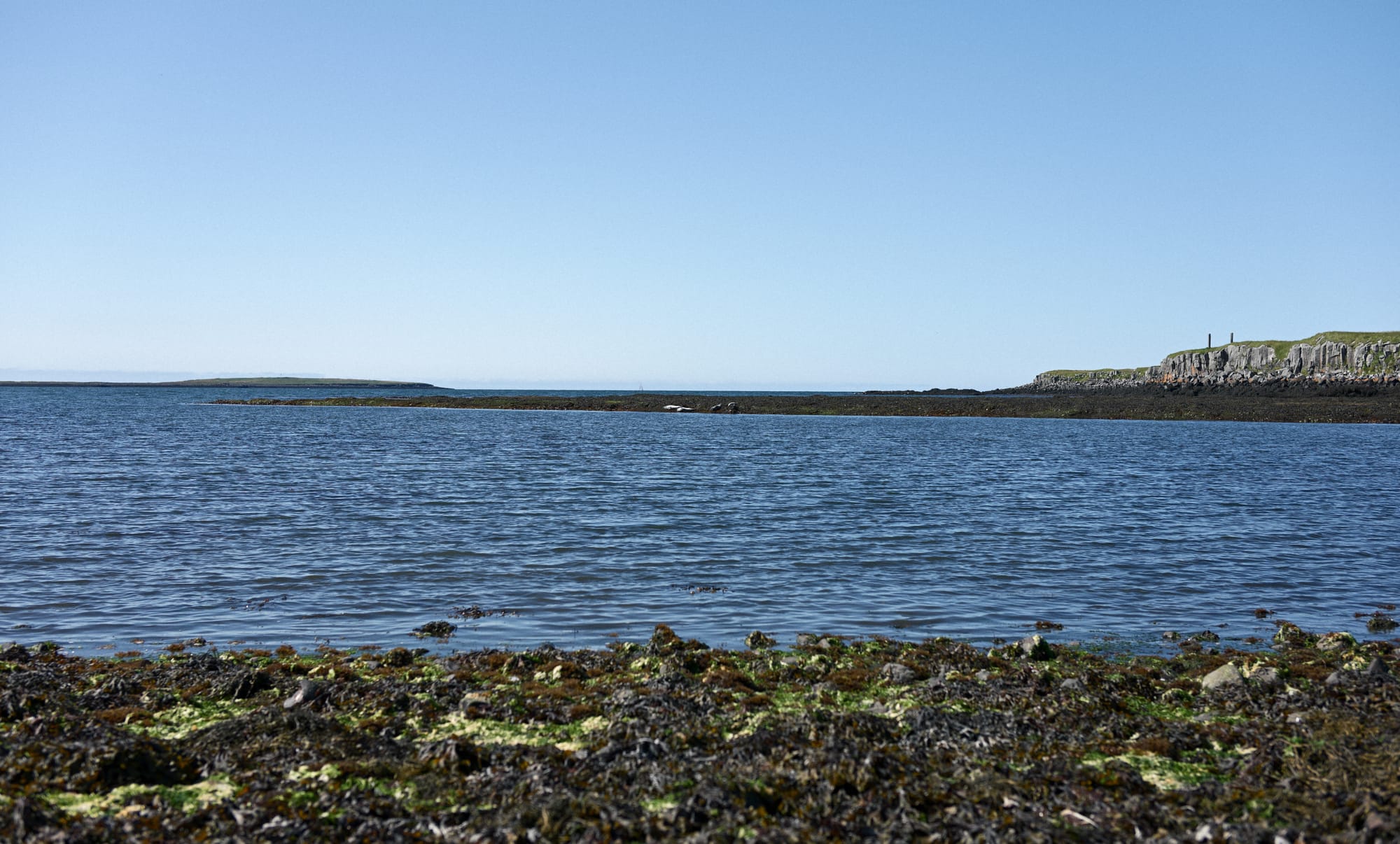
Basking on the far side of a cove were four (!!) seals. My wife and I rushed to the shore and observed them in their lazy glory.
(For the last two years, we've been meaning to visit Ytri Tunga (West Iceland) in June to explore a seal hot spot, but haven't gotten the chance. I'd like to believe those seals swam from Ytri Tunga just for us.)
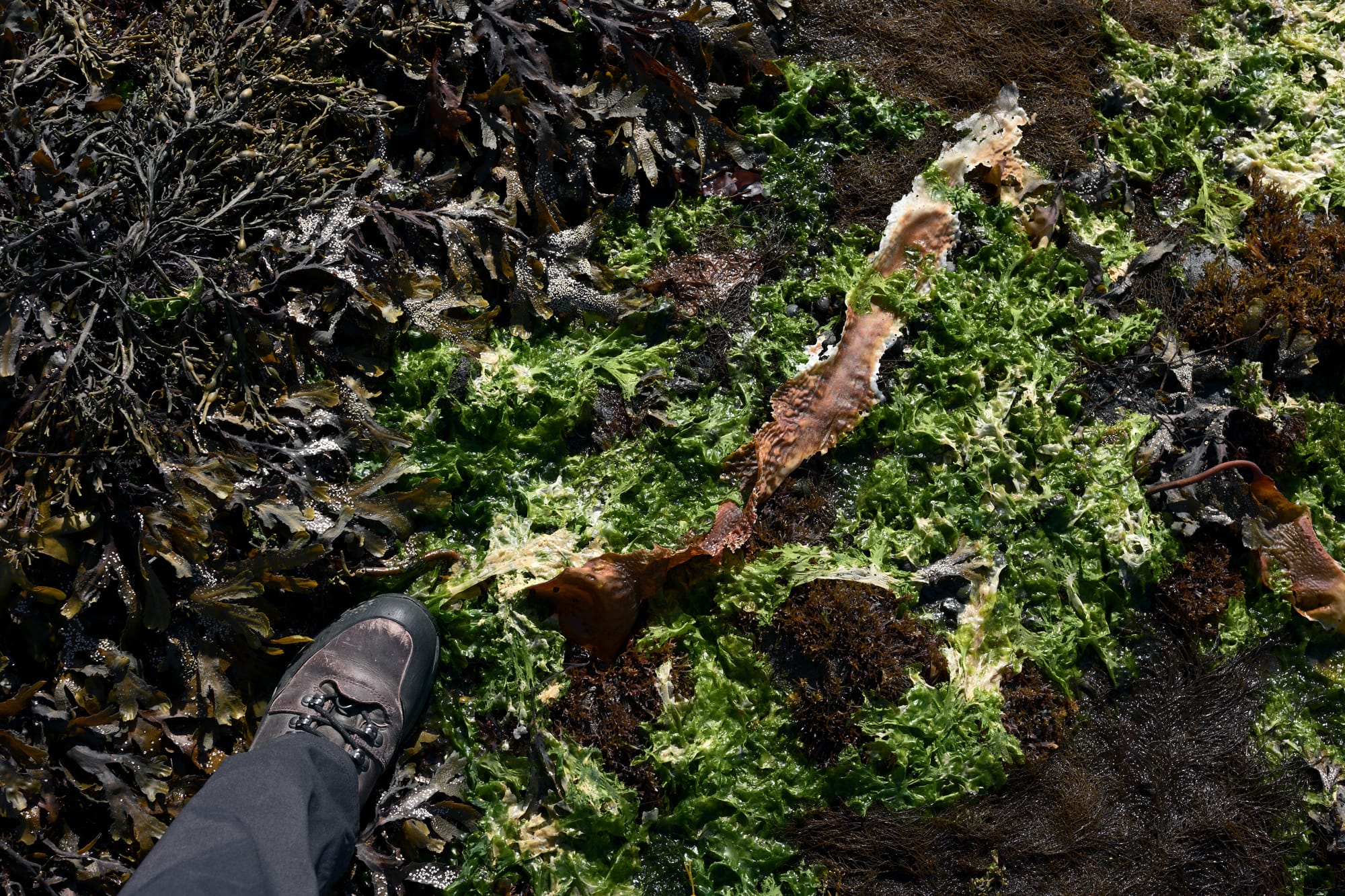
After a good five minutes, we joined Mum back on the main path and decided to head back to Viðeyjarstofa for a special reason.
You see, before Björk let us run loose, she revealed the reason why the event had been organised during the day this year.
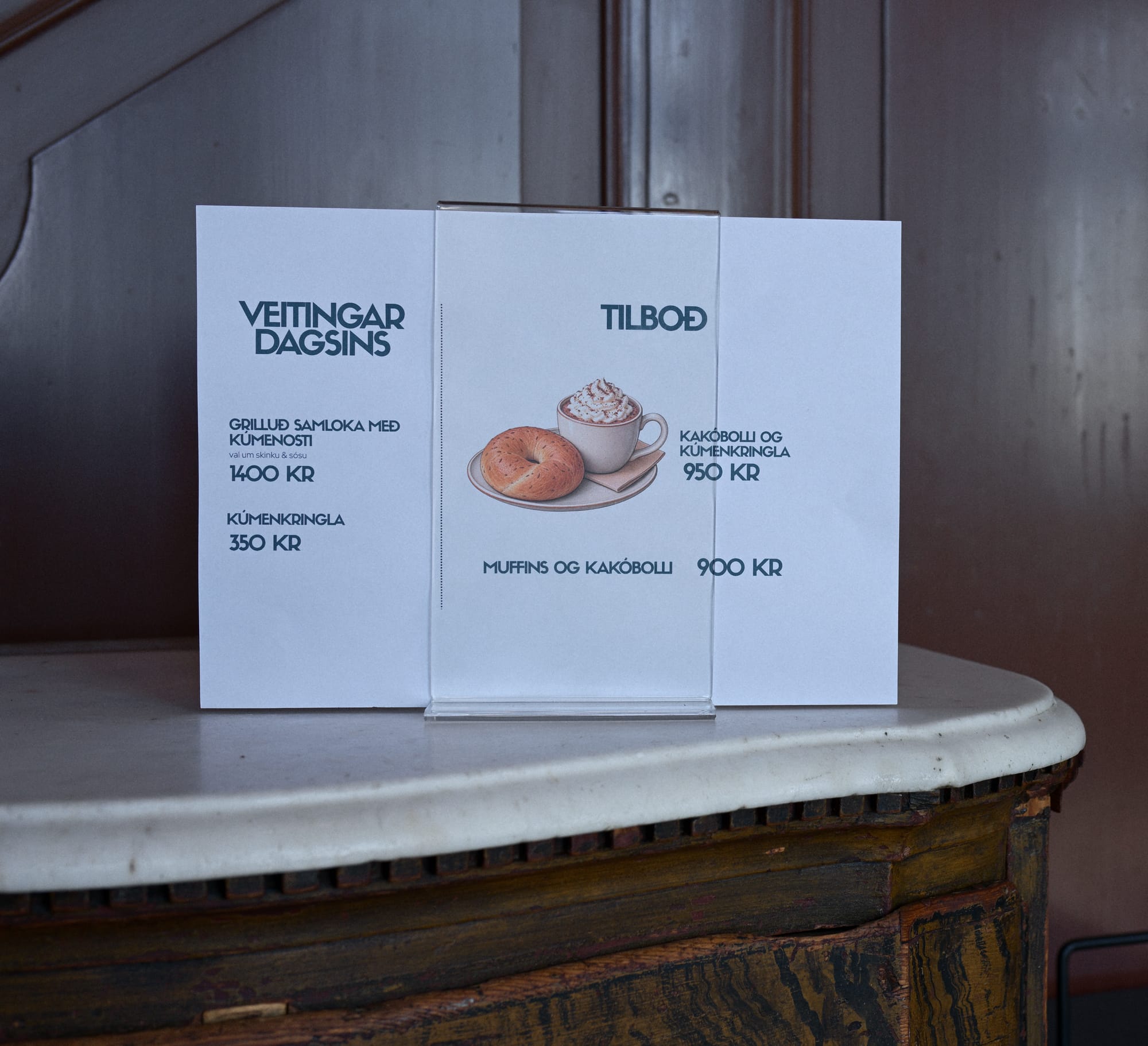
Surprise! The cafeteria had prepared a special caraway-themed menu.
Here's the translation:
- Grilled sandwich with caraway cheese: ISK 1.400
- Caraway bagel: ISK 350
- Cup of coffee and caraway bagel: ISK 950
- Muffins and hot chocolate: ISK 900
I was underwhelmed, frankly.
No caraway coffee? Seriously?! … *Childish tantrum*
More bad news? The bagels … weren't fresh. In fact, I think they might have been bought at a supermarket the day prior.
As for drinks, the ladies struck gold with their hot chocolate. I can't say the same about my Americano … The remedy, I found, was adding some hot chocolate.
Despite the anticlimax, I still must commemorate Viðeyjarstofa for doing something. This type of promotion is rare in Iceland. (Granted, I did see some total solar eclipse product campaigns, so perhaps it's on the rise.)
In contrast, the Japanese are black belts at this. They'll use anything — a seasonal queue, city particularity, franchise anniversary — and wrap it in a charming festival, expo, or product line with exclusive designs and tastes. More often than not, I've found that they genuinely enhance the experience.
After the break, we roamed the main area, enjoying the sun's warmth and picking some last-minute seeds.
But before we knew it, it was time to catch the 16:30 ferry.
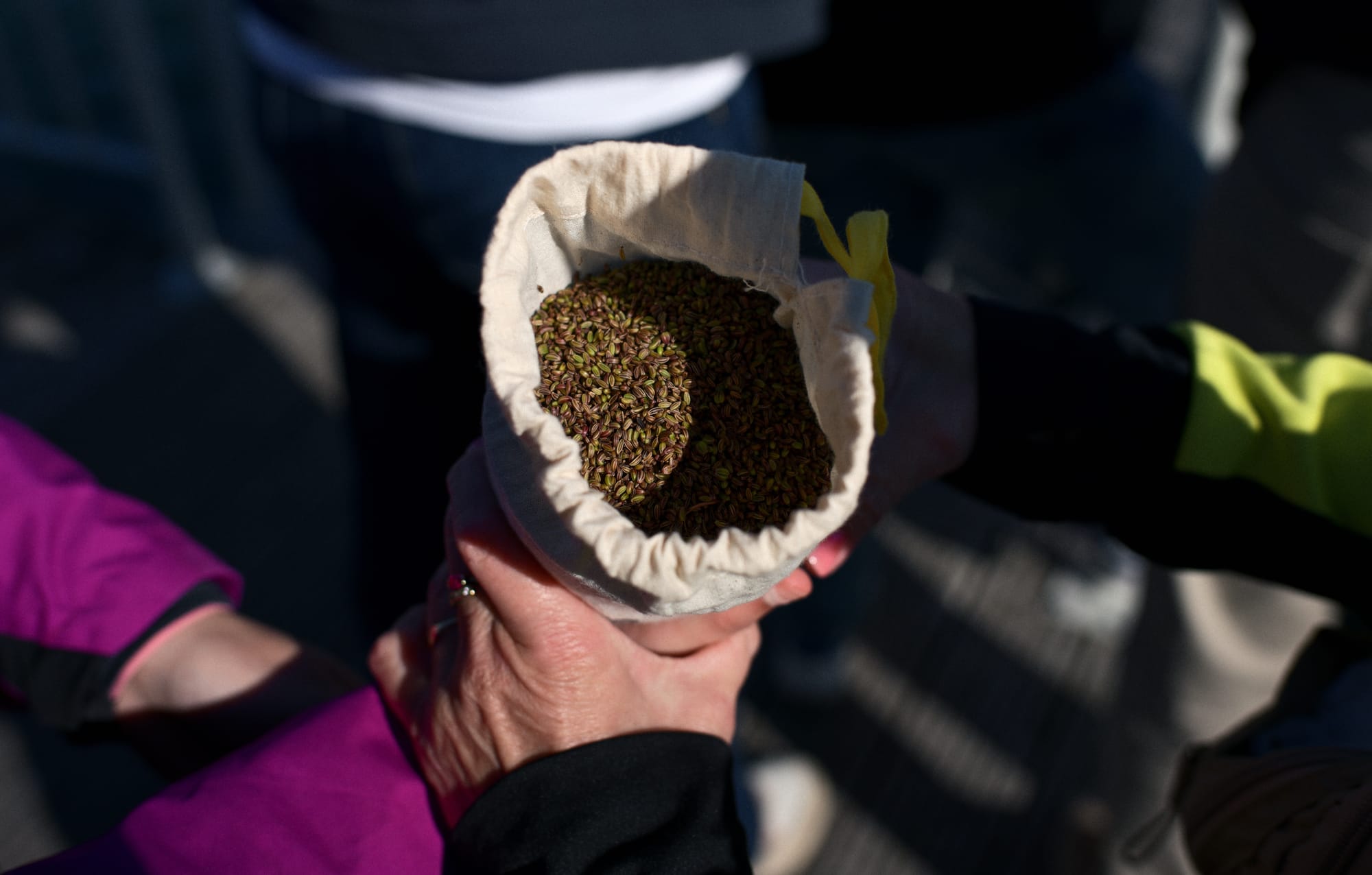
As we waited to board the ferry, I asked the ladies to display the day's yield: about 300 grams, of which I'm credited with a whole 14 grams.
We decided Mum would take the bag home and supervise the drying.
I can't wait to find out what we do with the seeds come October. Caraway coffee for sure. (For updates, make sure you're subscribed to my other newsletter, Moonquake.)
I've known about Viðey since I first set foot on it in 1999 for my cousin's confirmation party. I was 4 at the time.
Since then, I've returned — throughout my childhood, my teens, and as a young adult. I've gone with my family, my friends, even a couple of girlfriends. All the while, the island withheld its most relevant treasure from me. It left me a centuries-old discovery up to fate, or dumb luck. Except … it didn't.
Viðey never hid anything from me. Caraway is possibly Viðey's least-secret secret. It's right there, growing in plain sight.
I can only blame myself. I wasn't curious enough. I explored too fast. Too shallow. Too easily. Until one day, entropy finally deemed me worthy of a slap.
(Just now, my eyes drifted to my shoe rack and some of its worn occupants. Man, I can't believe my boots knew Viðey's secret before I did. They smelled it first, years ago, and could say nothing!)
I don't mean to end all Nietzsche on you, but the fact that we so blindly walk past countless other profound discoveries (plants and beyond) can only be described as a little tragic, no? Let's stay vigilant, shall we?
D
PS: Bollocks! Over 3,000 words … This was supposed to be an indie issue, and yet it ends up as long as the June blockbuster?! If I had a leitmotif, it would be irony.